CALL FOR ESTIMATE
123-456-7890
Scars
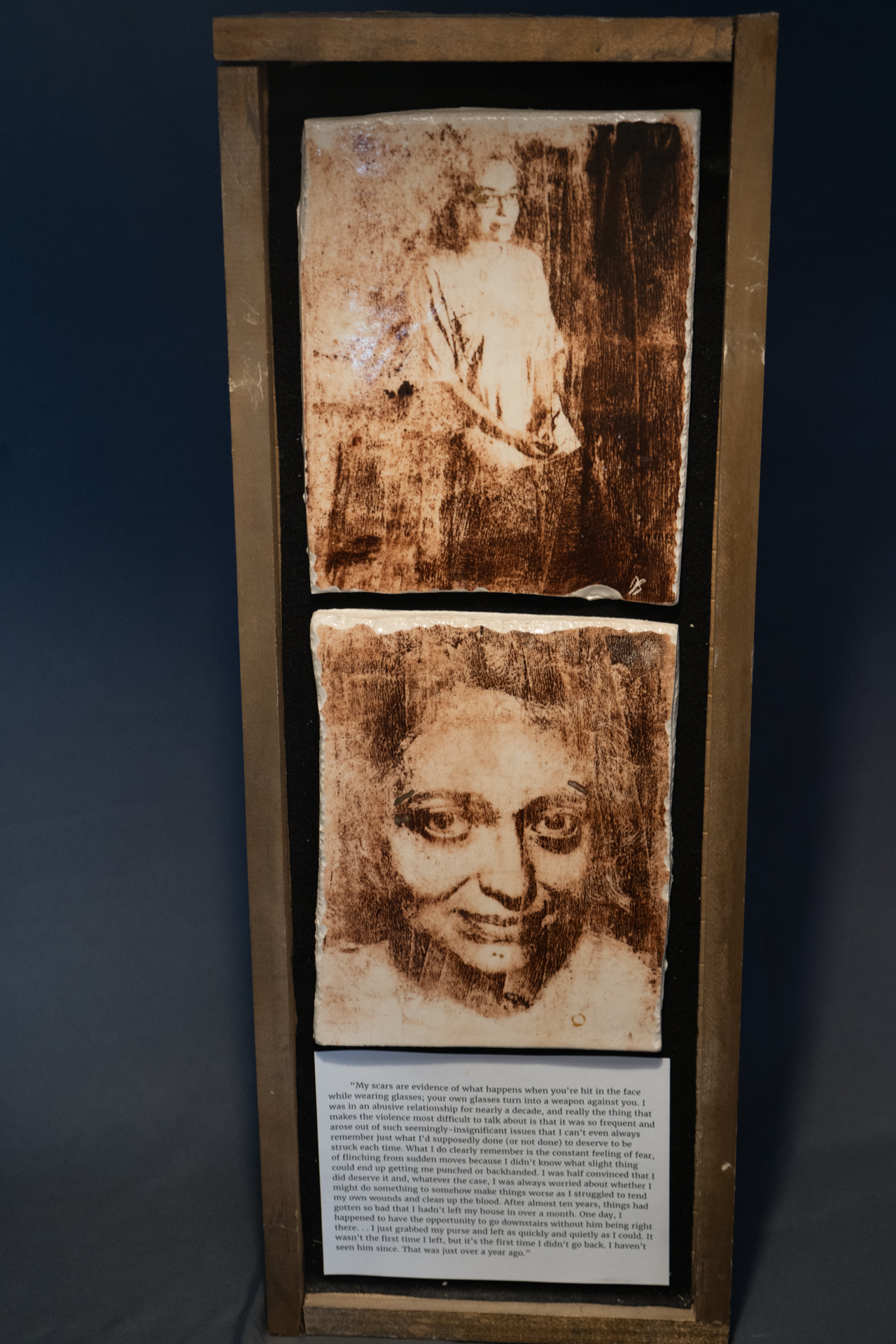
The physical representation of trauma on the human body can be easily identifiable by scar tissue. These deviations in our complexion are reminders of the pain we have endured. These physical representations often come with mental baggage as well. Our bodies may heal over time, as will our minds, but evidence of the past still remains. It does not decrease our value as people, but gives us a history which we have lived through. Scaring is the most obvious sign of past hardships. And continuing to live past that is proof that our traumas do not stop us in life.
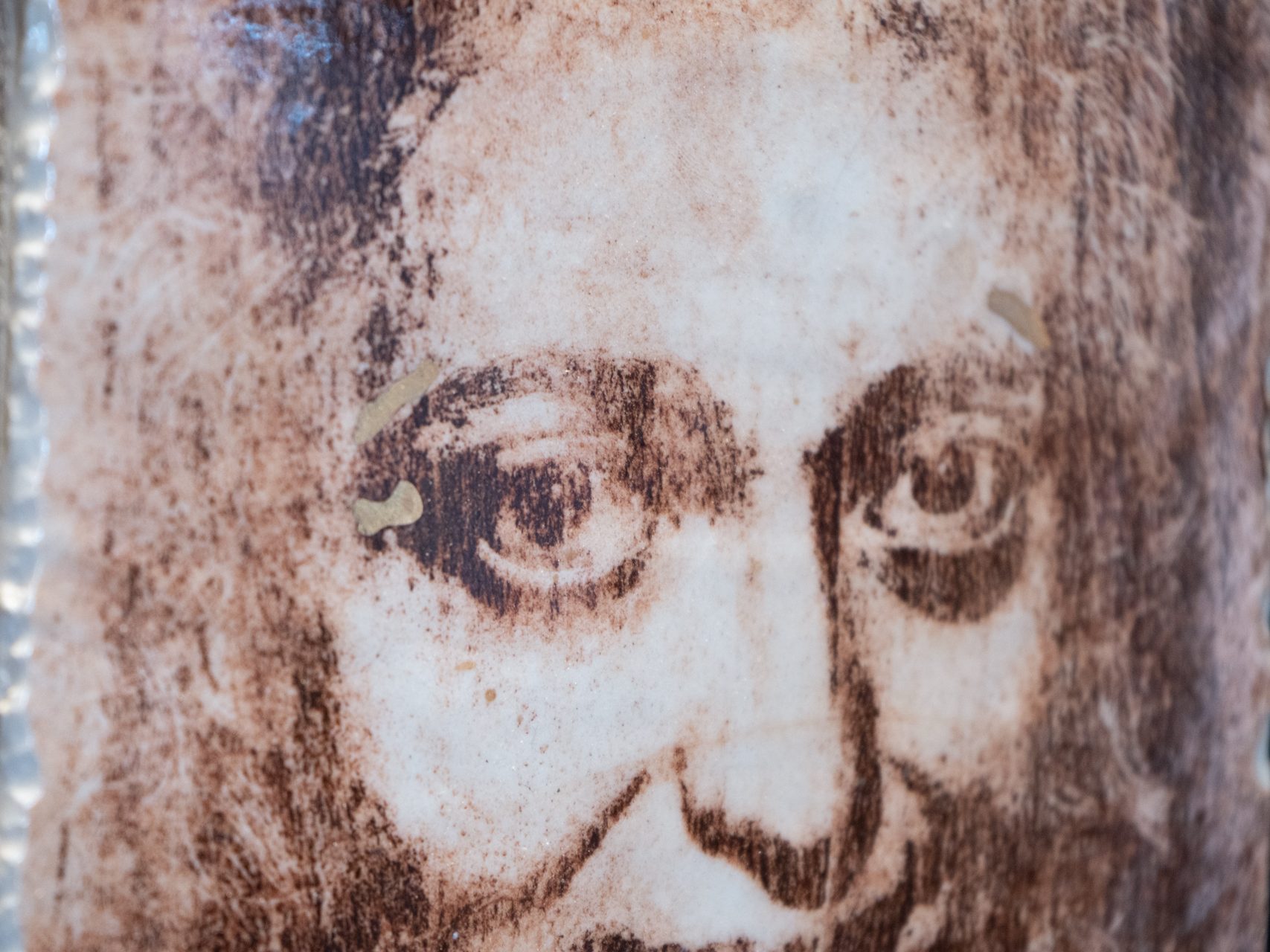
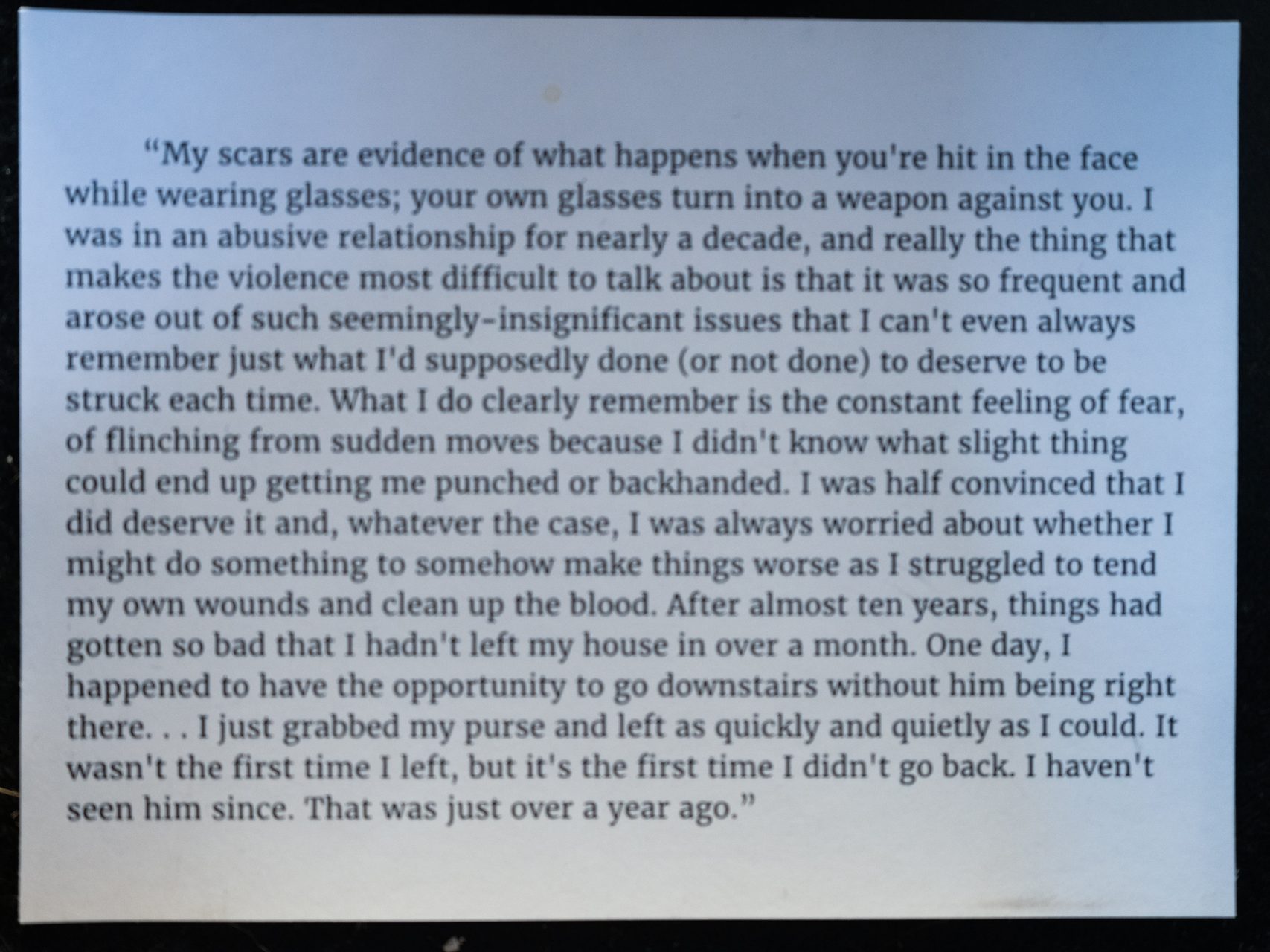
This series is composed of three distinct parts. The first is a photo portrait taken of the individual, showing them from a distance, and then showing their scars up close. Next the photos are transferred over to porcelain tablets and the scarred areas are highlighted using gold luster. Finally an account from the subject on what caused the scarring is given.
Shattered
When unexpected tragedies hit it is often hard to find the silver lining. When destruction wreaks havoc on life the pieces that are left are sometimes hard to be seen with value. But when something is broken, when we go through a trauma, one of the things that remains and that we gain is empathy.
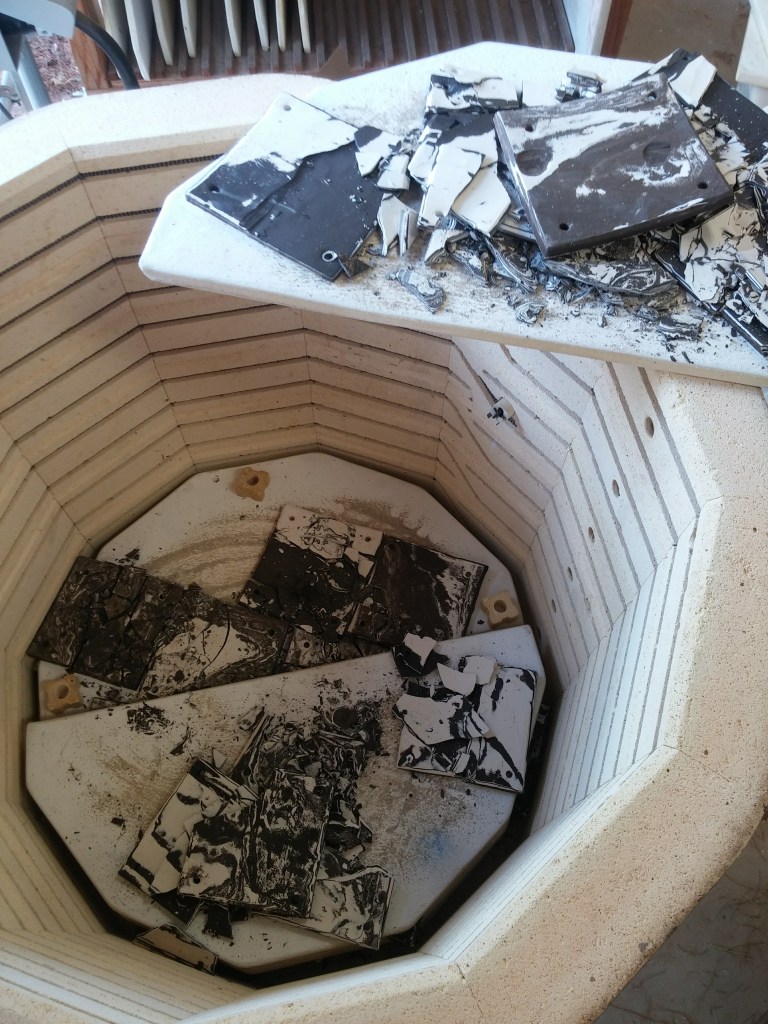
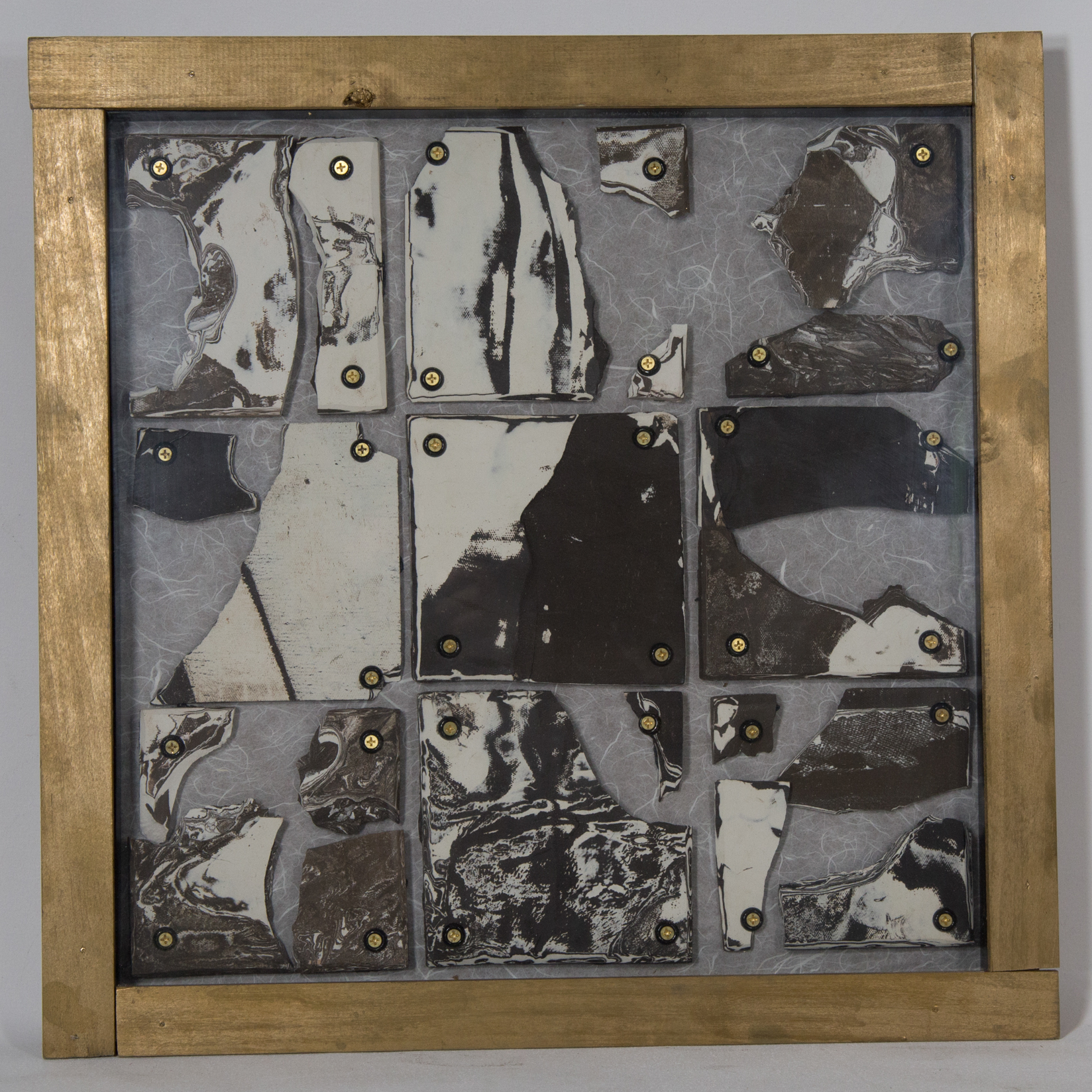
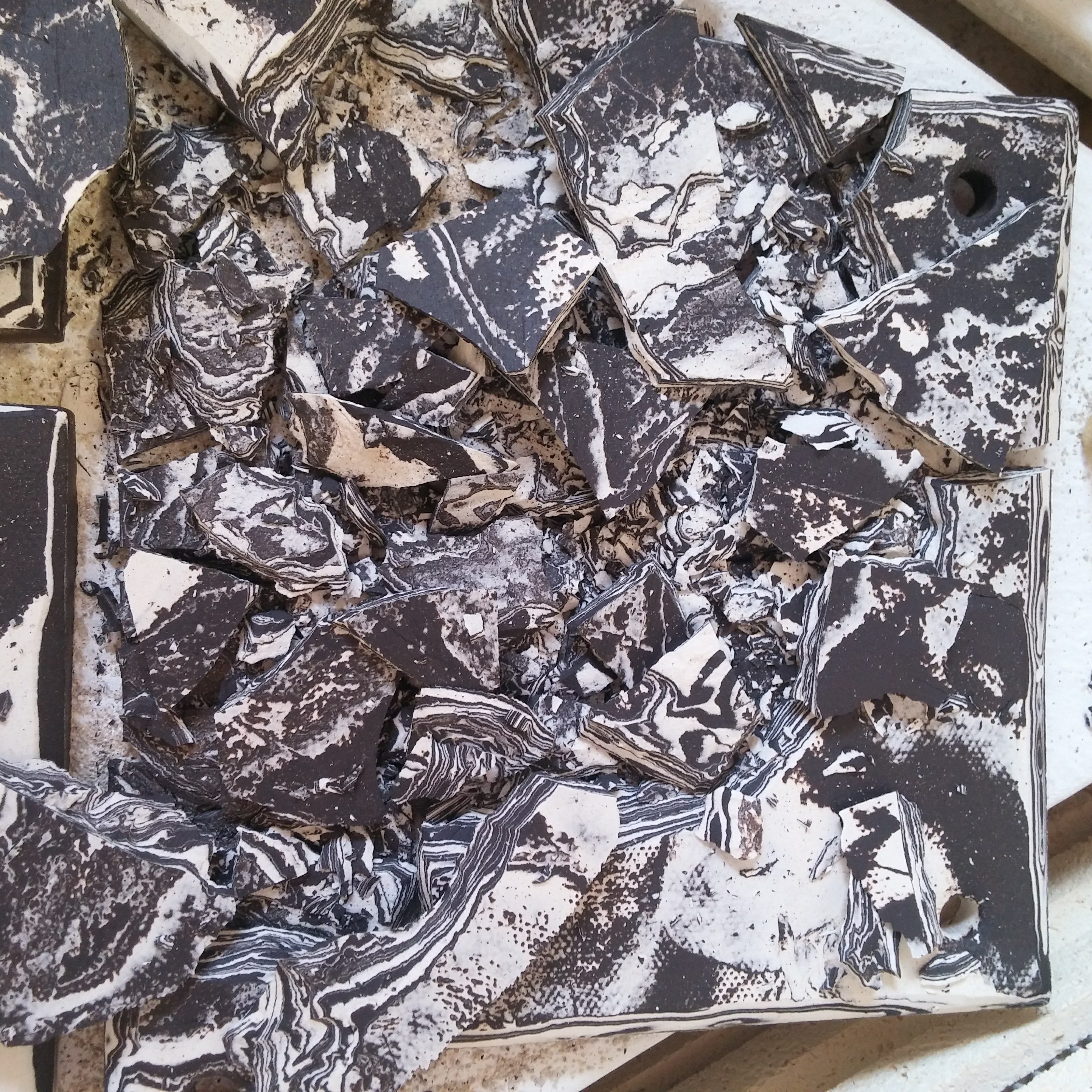
These tiles were originally meant to be turned into a bench. The kiln fired too quickly and the moisture remaining in the clay turned to steam, and shattered the tiles. While unloading the catastrophe I noticed many of the corner pieces were still in tact. I had drilled out the holes prior to firing for the purposes of mounting the tiles. I arranged the tiles in 3×3 grids, using my best judgement to match the corners to their original tile. Using brass screws I attached the corners to a backer board, and framed them using golden wood slats.
Continually Broken
This piece was done as an interpretation of Allen Lucier’s “I’m Sitting In A Room” in which he records himself saying a phrase into a recorder, playing it back, and recording the recording. He does this dozens of times until the final recording is unrecognizable.
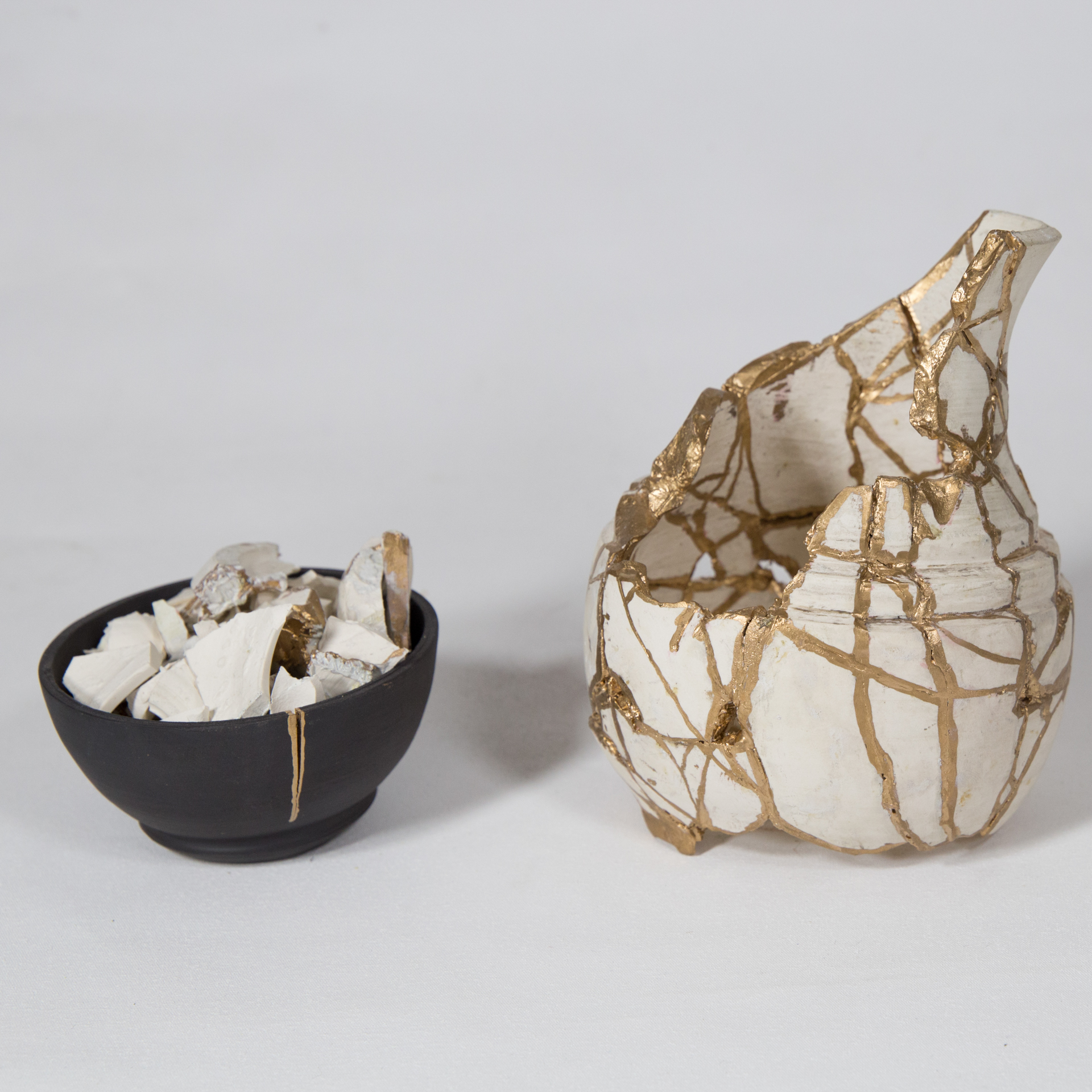
Translating that into ceramics I threw a porcelain vase. I then dropped the vase on concrete, and put the pieces back together using gold epoxy reminiscent of Kintsugi. I repeated this process, noting how the epoxy held the piece together better than the previous drops, and how some pieces were unable to be fitted back into place.
For me this represents how through life the challenges we face have the potential to make us stronger, but at the same time whenever we are hurt, we lose a small piece of ourselves.
The physical piece is meant to be displayed in accompaniment with a video showing the vase breaking each time it is dropped.
Letting Go
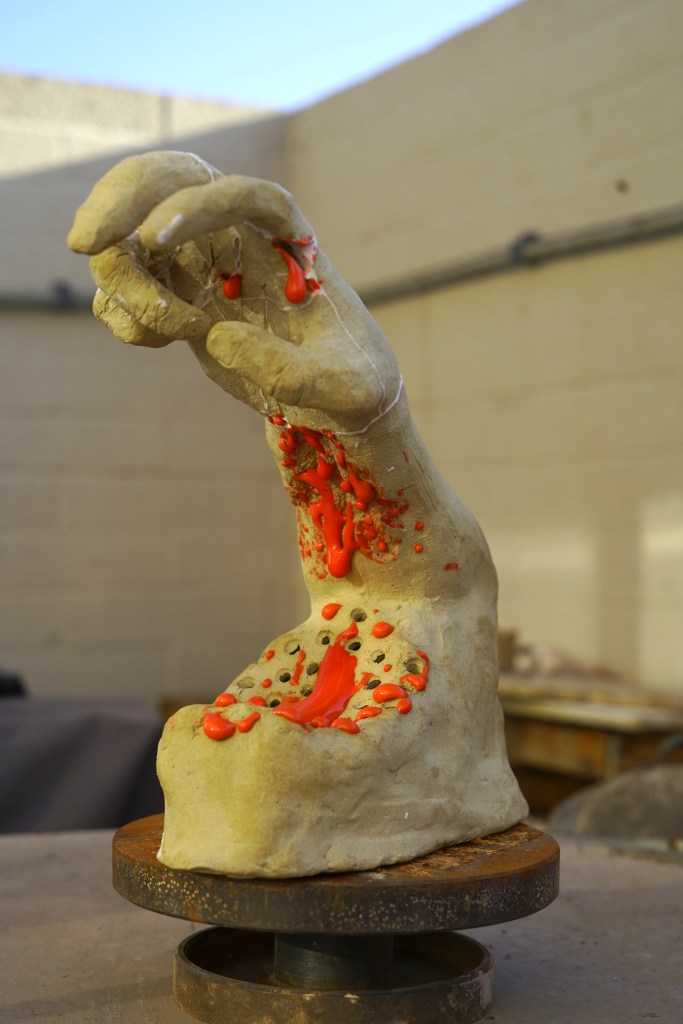
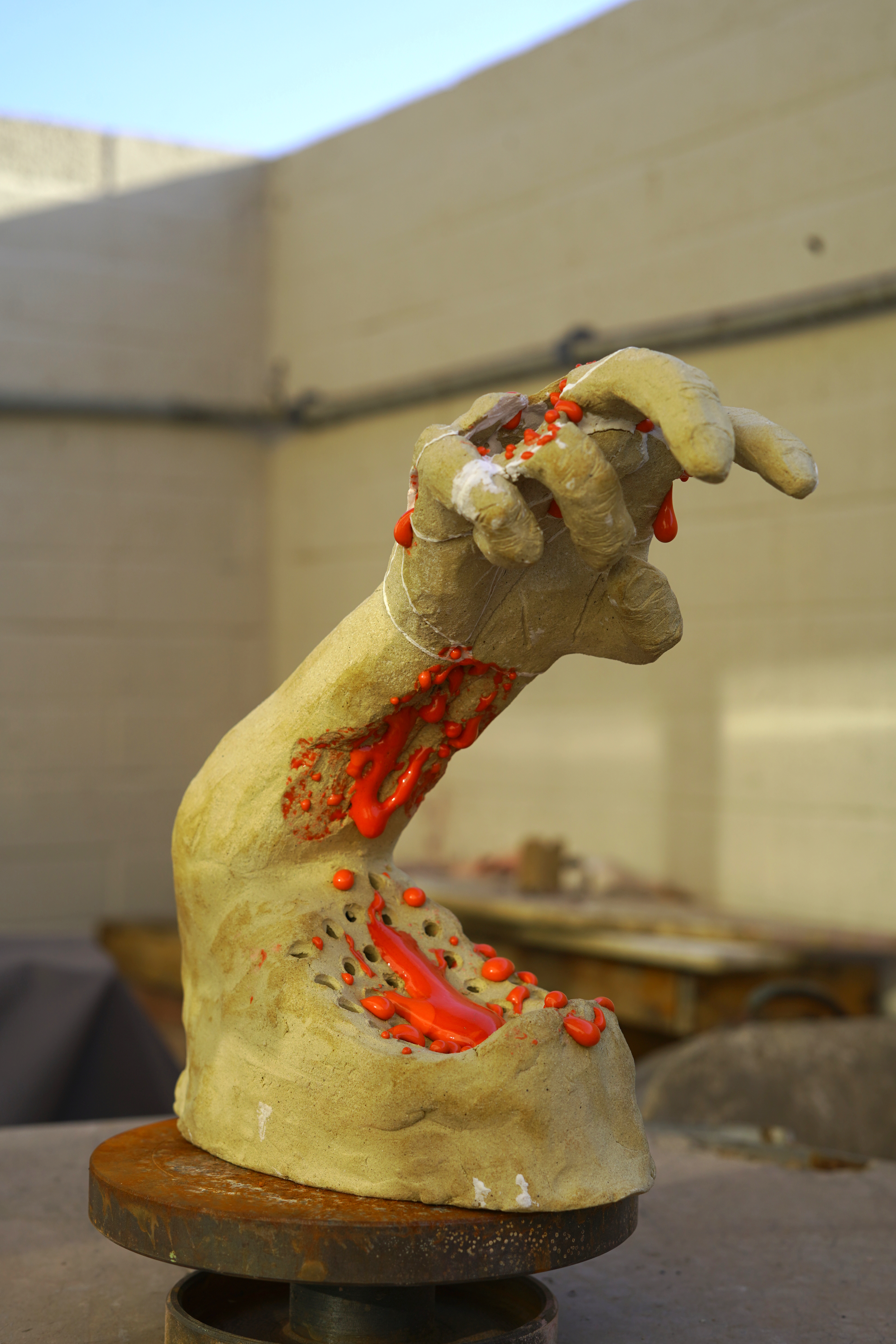
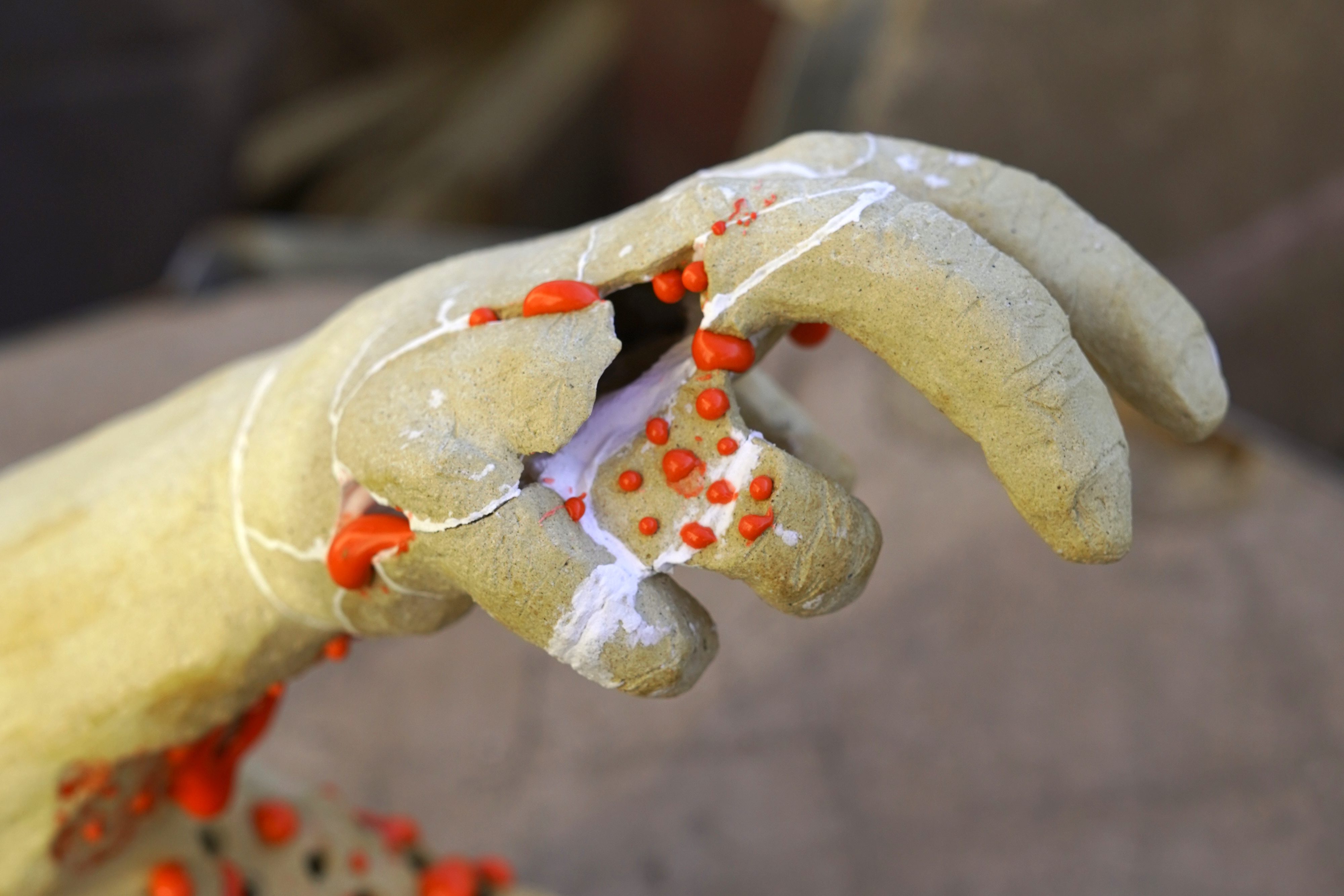
This hand sculpture is a first in a series that is set to explore the various methods we use to cope with mental illness. As someone with lifelong depression and anxiety my journey to healthy living has had its ups and downs. There are many tools available in life to help cope. Some of these are useful, some harmful. Some a mix of both. This series attempts to approach the subject of mental health with honesty and open-mindedness. There is no blanket solution to mental health issues. What works for one person might be actively harmful to another. Unfortunately the path to a better mental state is often filled with challenges and setbacks, and often the trial and error of trying to find a solution can lead to a tragic ending. The path itself may be fraught with stumbling and setbacks, but the seeking of a better tomorrow is something that I believe is unequivocally valuable and admirable. This hand is a proof of concept piece with many iterations to come. Initially the hand was sculpted with cutting scars along the wrist which were intended to show the perseverance of someone who self harms. These scars were going to be gilded in gold in reference to the Japanese mending art of Kintsugi. Showing that the presence of scarring is a victory of longevity. That for every cut made against oneself the will to continue on was stronger than the desire for things to end. Initially I expected the wrist to explode in the first firing, leaving the scaring present but allowing a large gash in the wrist to house the blood-like glaze to seep from, showing an eventual loss in life through the same method that was fought against and prevailed so many times before. This is to help symbolize the constant struggle with mental health and how it seldom is a battle that truly ends. The hand is modeled in a classic iconography often associated with Christianity; symbolizing the holy trinity. This is a nod to how many seek a higher power to overcome their struggles, but even so the possibility of loss exists. In a world where so many people are polarized on the belief an almighty being; as an atheist I see the potential helpfulness of religion in recovery and progress. As someone who was extremely religious for a time and searched their for solutions to my health problems, I found it to be more harmful than helpful. And only when I started to pursue other avenues did I see progress.
 James Schwarz